
Forwarded this in an email? Subscribe for all things bendy here:
Aging is the inevitable result of not dying, a triumph, and yet it does bring some new physical challenges. One of those challenges is a change to our connective tissue that can result in reduced flexibility over time. Fortunately, just like with muscle and bone density loss, these changes are not inevitable.
Does this sound relevant to you? If so you might like my new announcement…
Retreat Announcement: Training for Femmes Over 45
I’m thrilled to announce that I am returning to Casa Chango in Oaxaca, Mexico to co-teach a retreat with the legend Kerri Krisinksi on exactly this topic! This week-long series for women and women aligned non-binary people over 45 offers specific tools and exercises to take care of our bodies and spirits as we move through this “second adolescence” of middle age.
The details:
Dates: November 21-28, 2026
Location: The idyllic Casa Cango retreat center in Oaxaca, Mexico
Instructors: Kristina Cañizares and Kerri Krisinksi
Who its for: Women, non-binary, trans folks over 45 looking for ways to adapt their training strategies for their changing bodies while breaking down the conventions and BS around what it means to be femme and getting older
Cost: Varies depending on when you sign up: early birds get cheaper worms
More information: Find more details, including gorgeous pictures of the retreat center and other activities offered, by smashing that button below
The obvious: Yes, we know this is over Thanksgiving. We thought that would be a great time to escape the winter and come get feral with us! Bring your partner and family; child care is available

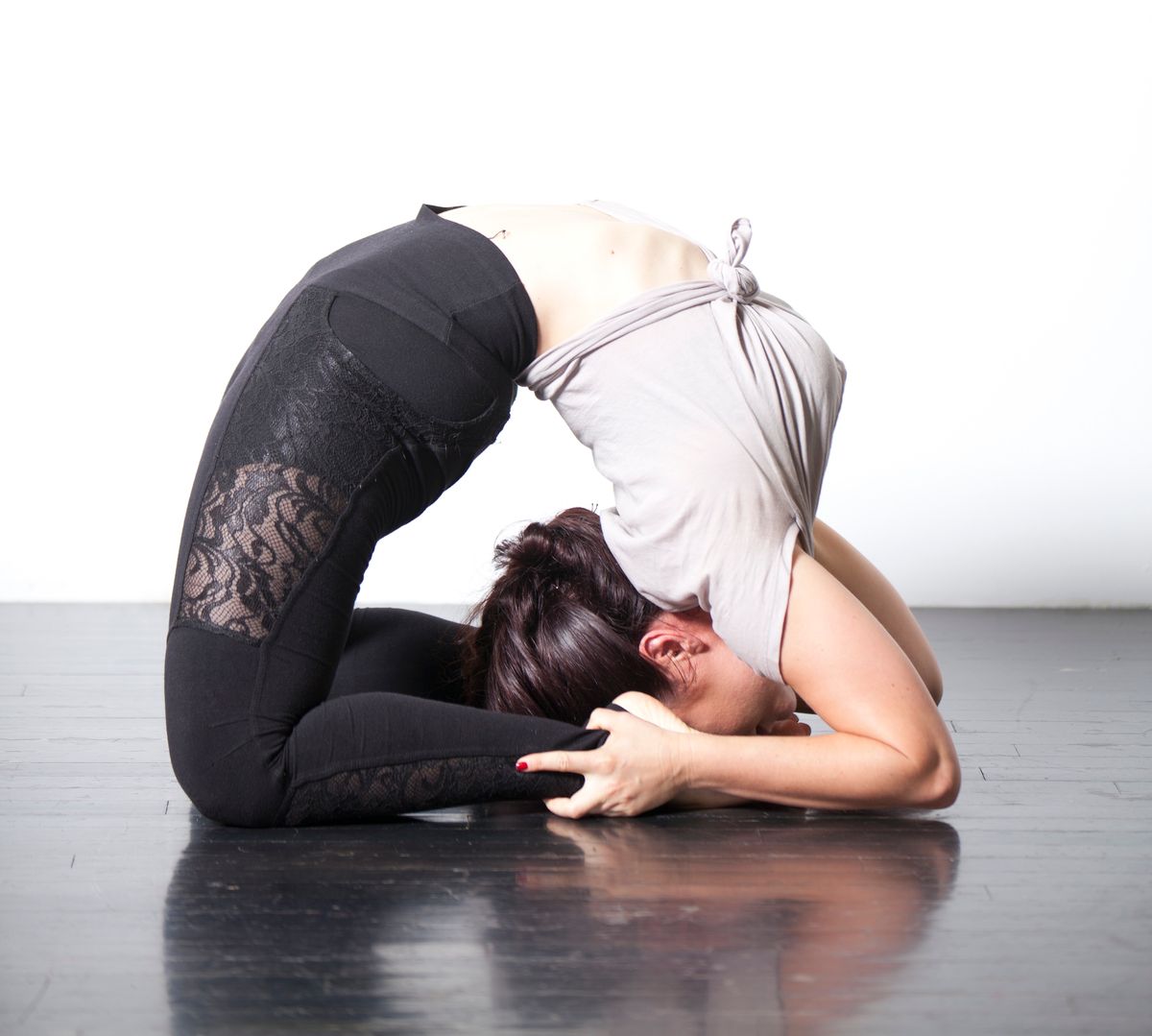
This could be us in November!
What Happens to Our Bodies that Affects Mobility as we Age?
On paper, the stats about aging can be a bit of a bummer. Every year after 30 we lose muscle mass. Our ability to produce maximum muscular strength and power, largely a neurological function, decreases from our mid-20s on. By our 40s bone density starts to drop, particularly for those of us who depend on estrogen, that little minx, who abandons us somewhere in the middle of our lives.
One of the changes that most affects mobility is a decreased juicyness of our connective tissue. When we are young and hydrated our fascia is filled with interstitial fluids that enable it to glide and slide when we move for effortless mobility. As we age we have a tendency to dry out. Part of this is the well-documented tendency towards dehydration that occurs in older folks—for some reason we just don’t feel as thirsty and tend to drink less fluids. Part of it is also the accumulation of scar tissue and gummy adhesions that build up due to immobility, injury, and overuse.
Since, as I have been writing about for years, strength and mobility are actually two sides of the same coin not oppositional traits, the loss of muscle mass, strength, and power can also contribute to chronic tightness and reduced range of motion.
But before you resign yourself to a life in the Lazy Boy and hang up your stretchy pants, let me assure you that these changes are not inevitable.
Strategies for Combating Age-Related Decrease in Mobility
Where there is life there is hope. Of course, hope alone won’t change much, you also have to do something. One of the biggest drivers of decreased mobility as we age is that we spend less time on fitness in general, and mobility in particular. We get busy adulting, and likely have less gas in the tank to fuel long training sessions. Gone are the days when I had the time and energy to spend 2-4 hours at the circus gym pushing myself to exhaustion.
But what do we do? The restrictions on time and energy are real, as are all the accumulated dents and dings and aches and pains that decrease the yummy feelings of flexibility work. But if we don’t work at all, entropy wins, and our bodies pay the price.
Training consistency is more important than training intensity
Do something every day, even if it is a tiny little something. Flexibility is dependent on physical structures like fascia and muscle for sure, but much of it is governed by our nervous system. It is the nervous system that decides how much we are allowed to move before the muscles tighten up and say no. Expanding the range in which the nervous system feels comfortable happens with consistent, submaximal training rather than periodic, highly intense training. So even if you just do 10 minutes of gentle range of motion work in between sips of your morning coffee you are still doing so much more than nothing.
Stay strong to stay flexible
As I said above, strength and mobility are linked. So often when we encounter chronically tight muscles it is because something in the body feels unstable. Because we lose muscle as we age, if left unattended our bodies compensate for the decreased capacity by guarding: engaging of all the muscles in an area to protect joint integrity. Eventually this leads to the classic old person way of moving where everything looks rusty and tense. Fortunately, older people still respond to strength training just like younger folks and, as long as you build gradually and listen to your body as you go, you can keep your strong, responsive muscles and chill out that nervous nervous system.

Just give those joints a little oil!
Build strength through all your ranges and planes of movement
A lot of us stop moving as freely as we age. Part of this is the time and energy thing, but we also can become fearful of hurting ourselves. Since you have probably had some kind of injury, surgery, or pain issue by the time you hit your 40s you are more likely to be cautious in your movement. This is compounded by how often the medical advice for pain and injury is to restrict movement to a “safer” range.
Obviously sometimes restricting range is important, but too often I’ve worked with clients who have stopped doing an exercise for fear of exacerbating a condition, and the less they use that range the more unstable and painful it becomes. Working through pain and injury requires a lot of care and a shift in mindset from the full throttle training of our younger days, but it is often still possible and extremely valuable.
If you have a range of motion available to you, you want to be able to control it. And if a range has ceased to be available, expanding control is a good way to get it back.
So when you are programming your precious training time, think about all the different ways that your body can move and try to use them. I realize that this sounds very time consuming, but again you don’t have to max anything out, just don’t stop using it. If you don’t use it, you’ll likely lose it.
Since my new Strength & Conditioning certification is all about programming I’m going to be offering more advice on how to adapt traditional strength training programs to work for people who are interested in maintaining or expanding range of motion as well as building strength and stamina. Yes, this is possible.
Since you read this whole newsletter you must find some benefit in my work. Thank you! If you have friends, colleagues, exes you still talk to, people you met at the dog park who might like this stuff too, please become part of my referral program! Everyone who refers a friend is entered to win a 30 minute AMA with me to discuss all your burning questions about flexibility fitness and more…
I appreciate you so much!
Happy Bendings,
Kristina
P.S. Early bird pricing for the Body & Vibe Over 45 Retreat is only through August 22nd so get on it! I’m so excited to share this one with you.
