
Forwarded this in an email? Subscribe for all things bendy here:
Today’s missive was inspired by an episode of the Polyester Podcast, a feminist pop culture weekly show out of the UK. This time, hosts Ione Gamble and Gina Tonic were discussing the way that manosphere bros have pounced on the “Pilates girl” trope as a dog whistle for a certain type of woman—one which is thin, healthy, feminine, affluent, probably white and therefore desirable.
I love listening to Ione and Gina dissect pop culture, their takes are always funny and insightful, but this episode made me sad. Both women expressed a clear distaste for Pilates, despite having never done it, because of the way that it is portrayed and marketed online.
And I agree with them. Despite my years of practice and deep appreciation for Pilates I can understand why the elevation of the “Pilates Girlie” is off-putting enough to curb any interest in the practice.
My passion for Pilates and dissecting fitness culture inspired my first ever car rant post on IG, but I am still thinking about how this toxic trend has larger implications for Pilates practitioners and the larger fitness world.

So here is more…
A Brief Overview of Pilates History and Methodology
When I first started doing Pilates in the late 90s it was not widely practiced outside of the dance community. There were no Pilates studios near where I lived in the East Bay, I just took mat classes at my dance studio.
By the time I became a Pilates instructor through Body Arts and Sciences International (BASI) in 2012 it wasn’t hard to find a studio in any urban area. Last year, as I toured the world, I was able to find a Pilates studio in every city we visited from Paris to Tokyo.
On its face, I’m thrilled that Pilates has become so popular. I credit Pilates with my ability to mange my hypermobile body. My first reformer instructor, dancer and aerialist Tiffany Parish, saved my contortion career by helping me finally figure out lumbar spinal flexion.
Pilates wasn’t originally created for dancers, it actually started in an internment camp in Great Britain where a German self-defense instructor named Joseph Pilates developed a way to exercise using the springs from camp beds, forming the precursor to today’s reformers and Wunda chairs. His first clients were wounded soldiers in need of rehabilitation.
After the war, in 1926, Joseph Pilates moved to New York and opened a studio to spread his methodology. He wanted to call it Contrology but the name never stuck—a form of exercise that united mind and body, enabling an advanced ability to control your joints through a wide range of movement.
It is easy to understand why dancers were the first and most enthusiastic adopters. Dancers made Pilates famous, with photos of George Balanchine and Martha Graham performing impressive feats. Because our societal image of dance is highly gendered, more women were attracted to Pilates than men. Upper East Side socialites filled the classes by the 1950s, starting one of the first fitness crazes specifically adopted by women.

Joe Pilates instructing an unidentified young woman in a backbend on an early version of a reformer. This woman represents the epitome of the Pilates early adopter and ideal client.
To this day, Pilates is associated with affluent, thin, white, flexible, feminine women. This is the Pilates Girl, an aspirational figure used to garner clicks and sell products and programs based on her conventional appeal. And now the Manosphere has taken notice, and it likes what it sees.
Why is the Manosphere Talking About Pilates?
On their podcast Ione and Gina discuss a number of recent incidents involving bros expressing their preference for girls who do Pilates every day.
A contestant on Love is Blind dumped his fiancee, a doctor with a challenging career, by saying that he wasn’t attracted to her because he preferred a girl who did Pilates every day. Another example, cited in the article “Why the manosphere reveres the ‘Pilates girl’” in The 19th, involves a reality TV star whose husband was blackmailing her into going to Pilates.
The article quotes one male influencer saying, “If your girl goes to Pilates, wife her up immediately.” He adds that Pilates is wholesome, implying that a girl who goes there is going to be in an environment free from other men who might hit on her. It also quotes a professor of public affairs who studies the manosphere, Mariel Barnes, saying that Pilates has become a kind of code for these men: “It’s a way of telling people what you want without being explicit about it — and it’s also a way of trying to not seem like a terrible person.”
Rather than saying that you want an affluent, white, thin, flexible, feminine woman you can just say that you want a woman who does Pilates every day. Everyone knows what you mean.
What Does This Mean for the Pilates Community?
If you are reading this, and you love Pilates or are a Pilates instructor, and this association with lookist, elitist, racist, anti-feminist sentiment is making you squirm, I’m with you. This should piss us off. And it should inspire us to action.
Pilates has a long history of being elitist. Some of this is the economics of owning a studio full of expensive equipment, but much of it is because this kind of unrealistic, aspirational marketing works, especially in an era when thinness is back in vogue.
Last summer I read a New York Times article about a fitness instructor, MaryBeth Monaco-Vavrik, who made an Instagram post linking the increasing popularity of Pilates with the rise of extreme American authoritarianism, sparking a debate about the political implications of Pilates. She posits that there is a direct correlation between the control of bodies by government repression and control of bodies by the societal pressure to be thin. The post garnered millions of views.
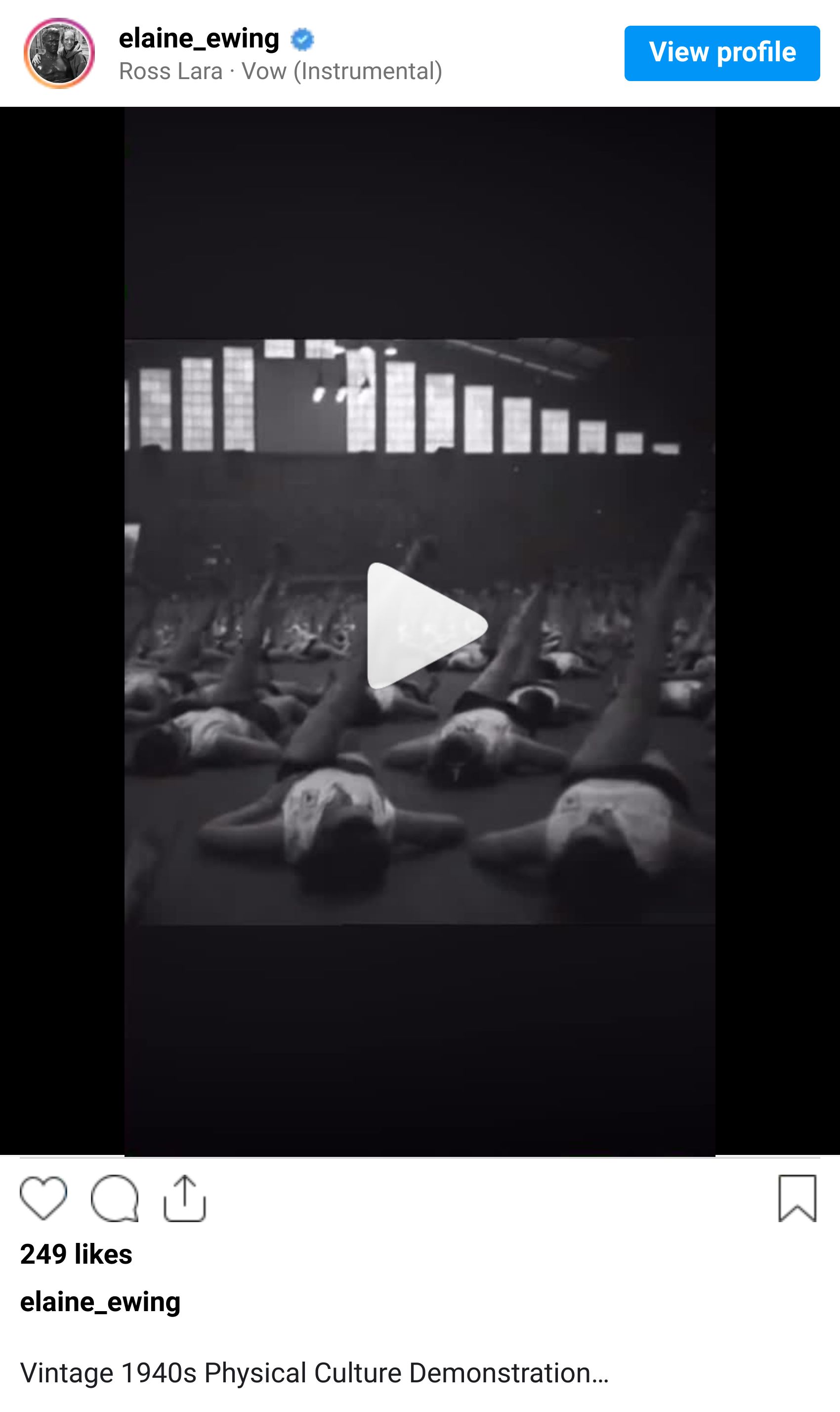
While many commenters took umbrage at the link between oppression and fatphobia, this is not a new idea. I recommend sociologist Sabrina String’s “Fearing the Black Body: The Racial Origins of Fat Phobia” if you are interested in learning more about the history of this connection.
The backlash against Monaco-Vavrik was intense, including accusations of misogyny. But she maintains that she is not against either Pilates or women, saying, “Pilates is great for your core strength, and for people who are suffering from connective-tissue weakness, etc. But how do we separate that from the fact that its marketing is extremely exclusionary? It’s extremely whitewashed. It’s based on wealth. It’s based on thinness.”
As long as this is the selling point for Pilates it will deter people from even wanting to try it as they anticipate (in some cases with good reason) that they will not be welcome in those spaces.
In the podcast, Ione and Gina posit that, unlike healthy exercise that helps you be free of pain and live a better life, Pilates is “rigid and scheduled and about control” or “restrictive.” They associate it with the harsh, disciplined world of looksmaxxing and self optimization that dovetails with gender essentialism and racism.
Whether or not you agree with these characterizations, the fact that so many people have this perception of Pilates can’t be ignored.
So the question for the Pilates Community is: are we ok with this?
And if not, what can we do to counter this narrative and pry this troubled but still extremely useful movement practice out of the hands of body fascists and authoritarian internet bros?
To be continued…
In my next newsletter I will talk about what Pilates can actually do for people’s bodies (hint: it isn’t weight loss) and why it’s so important, as fitness instructors of all kinds, to be honest about what we can actually offer our clients. I’m also going to talk to my dear friend and total baddass Lulu DePina, owner of Common Ground Pilates here in LA, about how she has created a welcoming and inclusive studio that breaks the stereotypes.
More on this next time, and in the meantime…
Happy Bendings,
Kristina
